From flooding in Lagos to drought in the North and environmental degradation in the Niger Delta, climate change is already reshaping Nigeria. The challenge is to expand energy access without deepening the environmental crisis.
For millions of Nigerians, climate change is no longer an issue confined to international conferences.
It is the floodwater entering homes and markets. It is the farmer confronting an unpredictable rainy season. It is the fisherman watching the coastline change. It is the unbearable heat in communities where electricity is too unreliable for adequate cooling.
Across Nigeria, climate pressures are increasingly intersecting with poverty, food security, public health and infrastructure.
Yet the country remains heavily dependent on oil and gas for export earnings, government revenue and economic activity.
That creates a difficult question at the heart of Nigeria’s energy transition:
How can the country provide the energy required for development while reducing the environmental damage and greenhouse-gas emissions associated with fossil fuels?
There is no simple answer. But postponing the question is becoming increasingly expensive.
Climate change is already affecting Nigeria
Nigeria’s exposure to climate change varies across its regions.
In the North, prolonged dry spells, changing rainfall patterns, desertification and water stress threaten agricultural livelihoods. For farmers who depend on rain-fed agriculture, uncertainty over the timing and intensity of rainfall can mean lower yields and greater financial insecurity.
In the Middle Belt and southern states, intense rainfall and flooding have repeatedly damaged farms, roads, houses and businesses. The devastating 2022 floods, which affected millions of Nigerians, demonstrated how quickly extreme weather can become a national economic crisis.
In Lagos and other coastal communities, the risks include flooding, coastal erosion and rising sea levels. Rapid urbanisation, inadequate drainage and the loss of natural flood buffers can magnify the effects of heavy rainfall.
In the Niger Delta, environmental pressures associated with oil production—including spills, gas flaring and ecosystem degradation—intersect with the region’s vulnerability to flooding and coastal change.
These are not separate environmental stories.
They are increasingly part of Nigeria’s development story.
The energy paradox
Nigeria’s climate challenge is complicated by its energy deficit.
The country produces oil and gas but still struggles to provide reliable electricity to millions of citizens. Businesses, households and public institutions frequently rely on petrol and diesel generators to compensate for weaknesses in the power system.
This creates an economic and environmental burden.
Fuel that could otherwise support productive activity is consumed simply to keep the lights on. Generator emissions add to local air pollution and greenhouse-gas emissions, while the cost of self-generation makes Nigerian businesses less competitive.
The paradox is difficult to ignore: a major energy-producing country has built a parallel generator economy because its formal electricity system remains inadequate.
Solving that problem should be central to Nigeria’s energy transition.
Oil and gas cannot simply be switched off
There is understandable pressure for Nigeria to reduce its dependence on fossil fuels.
But an immediate abandonment of oil and gas would be economically disruptive.
Petroleum remains important to government revenue, exports, industrial activity and employment. Nigeria also needs substantial investment to close its infrastructure and development gaps.
The sensible approach is therefore not an abrupt rupture but a managed transition.
Nigeria should continue to develop viable oil and gas resources responsibly while using the remaining petroleum revenues and capabilities to build a more diversified energy economy.
The question is not whether hydrocarbons will disappear tomorrow.
They will not.
The question is whether Nigeria will use this period to prepare for a future in which they play a smaller role.
Gas can help—but should not become permanent dependence
Natural gas occupies an important position in that transition.
Nigeria has substantial gas resources, and gas-fired generation can provide the dependable electricity required by households and industry while renewable capacity expands.
But gas should be a bridge, not a destination.
Nigeria has already experienced the danger of depending too heavily on a single energy source. Replacing oil dependence with long-term gas dependence would simply reproduce the problem in another form.
The country should therefore expand gas utilisation alongside investments in solar, wind, hydropower, storage, transmission and energy efficiency.
At the same time, reducing gas flaring and methane emissions should remain an environmental priority.
Capturing gas that would otherwise be wasted can simultaneously improve energy supply, reduce emissions and generate economic value.
The renewable-energy opportunity
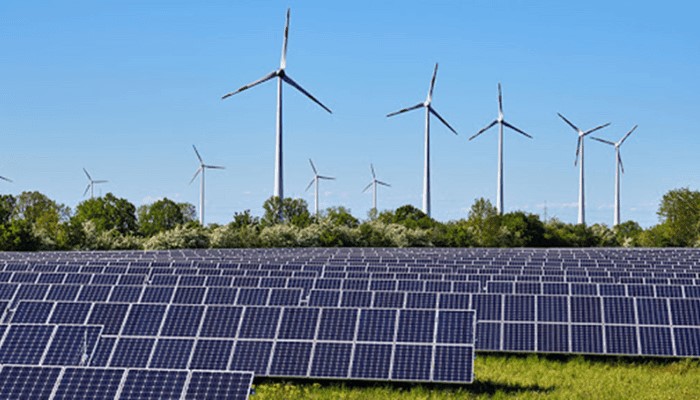
Nigeria’s clean-energy potential is considerable, particularly in solar power.
Solar and other decentralised technologies offer an opportunity to reach communities that are difficult or expensive to connect to the conventional grid.
Mini-grids can power rural communities.
Solar irrigation can support agriculture.
Renewable-powered cold storage can reduce food losses.
Businesses can combine solar generation with battery storage to reduce dependence on diesel.
These applications demonstrate why renewable energy should not be viewed only through the lens of climate policy.
It is also an instrument of economic development.
The same solar system that reduces emissions can keep a clinic operating, power a small business or help a farmer process agricultural produce.
But renewable energy is not a magic wand
Nigeria cannot solve its electricity crisis simply by installing solar panels.
The country needs a functioning electricity ecosystem.
That means stronger transmission and distribution networks, reliable metering, viable electricity markets, storage capacity and policies capable of attracting long-term investment.
It also means planning renewable projects responsibly.
Solar farms require land. Transmission infrastructure can affect communities and ecosystems. Hydropower projects can alter river systems. Mining for minerals used in clean-energy technologies can create environmental pressures.
Renewable energy is essential to reducing emissions, but sustainability requires attention to the environmental consequences of the entire energy system.
Climate change makes reliable energy more important
There is another reason the energy transition matters.
As temperatures rise and extreme weather becomes more disruptive, reliable electricity becomes increasingly important for climate resilience.
Electricity powers hospitals, communications, water systems, refrigeration and cooling.
For farmers, reliable energy can support irrigation and food processing.
For communities affected by extreme weather, decentralised solar systems and battery storage can provide essential power when conventional infrastructure is disrupted.
Clean energy is therefore not only a tool for mitigating climate change.
It can also strengthen Nigeria’s capacity to adapt to its consequences.
That is particularly important in a country where climate vulnerability and infrastructure deficits often reinforce each other.
The Niger Delta’s lesson
The Niger Delta provides perhaps the clearest warning about what happens when energy development is separated from environmental sustainability.
Oil has generated enormous wealth for Nigeria, but communities in the region have endured the consequences of spills, polluted waterways, gas flaring and damaged ecosystems.
For communities whose livelihoods depend on fishing and agriculture, environmental degradation is an economic issue.
A polluted river is not simply an environmental statistic. It can mean fewer fish.
Contaminated farmland is not simply an ecological concern. It can mean lost income.
This is why the energy transition must include stronger environmental governance in the existing petroleum sector, even as Nigeria develops cleaner sources of energy.
The transition should not mean waiting for oil production to end before taking environmental protection seriously.
Nigeria needs a just transition
The social dimension is equally important.
A clean-energy transition that raises costs for poor households, eliminates livelihoods without alternatives or leaves oil-producing communities economically stranded will not be sustainable.
Workers need opportunities to acquire new skills.
Communities dependent on petroleum activity need economic diversification.
Businesses need affordable alternatives to diesel.
Consumers need reliable electricity at prices they can afford.
Young Nigerians need access to the jobs created by the emerging clean-energy economy.
This is the essence of a just transition: reducing environmental risks while ensuring that the costs and benefits of change are fairly distributed.
Climate finance matters
Nigeria also needs international support.
The country has substantial development needs and faces high financing costs. Expecting it to fund the entire transition through domestic resources would slow progress.
If the global community wants developing countries to move faster towards cleaner energy, it must help make that transition financially viable.
Climate finance, concessional lending, technology transfer and investment in resilient infrastructure are therefore critical.
This is not simply a matter of charity.
It reflects the reality that climate change is a global problem requiring collective action.
From vulnerability to opportunity
Nigeria’s energy transition should ultimately be about building resilience.
The country can continue to use oil and gas where necessary while reducing waste, pollution and emissions.
It can capture more gas instead of flaring it.
It can expand renewable electricity.
It can modernise the national grid.
It can support mini-grids and decentralised power.
It can improve energy efficiency.
It can make infrastructure more resilient to flooding, heat and other climate risks.
And it can use the energy transition to develop new industries and create employment.
The objective should be an energy system that is reliable enough to power development, affordable enough for consumers, cleaner in its environmental footprint and resilient enough to withstand a changing climate.
The choice before Nigeria
Nigeria does not have the luxury of choosing between development and environmental sustainability.
It needs both.
The country still has oil and gas resources. It also has sunlight, rivers, wind resources and a young population capable of participating in a new energy economy.
The challenge is to connect these assets intelligently.
The energy transition should not be a race to abandon one energy source and replace it with another.
It should be a deliberate effort to build a more diversified, resilient and sustainable economy.
Nigeria’s future cannot be secured by pretending climate change does not exist. Nor can it be built by ignoring the energy realities facing its people.
The task is to use today’s energy resources responsibly while investing decisively in tomorrow’s cleaner system.
The oil may still be flowing.
The sun is already shining.
Nigeria’s challenge is to ensure that the energy choices made today do not become tomorrow’s environmental burden.