

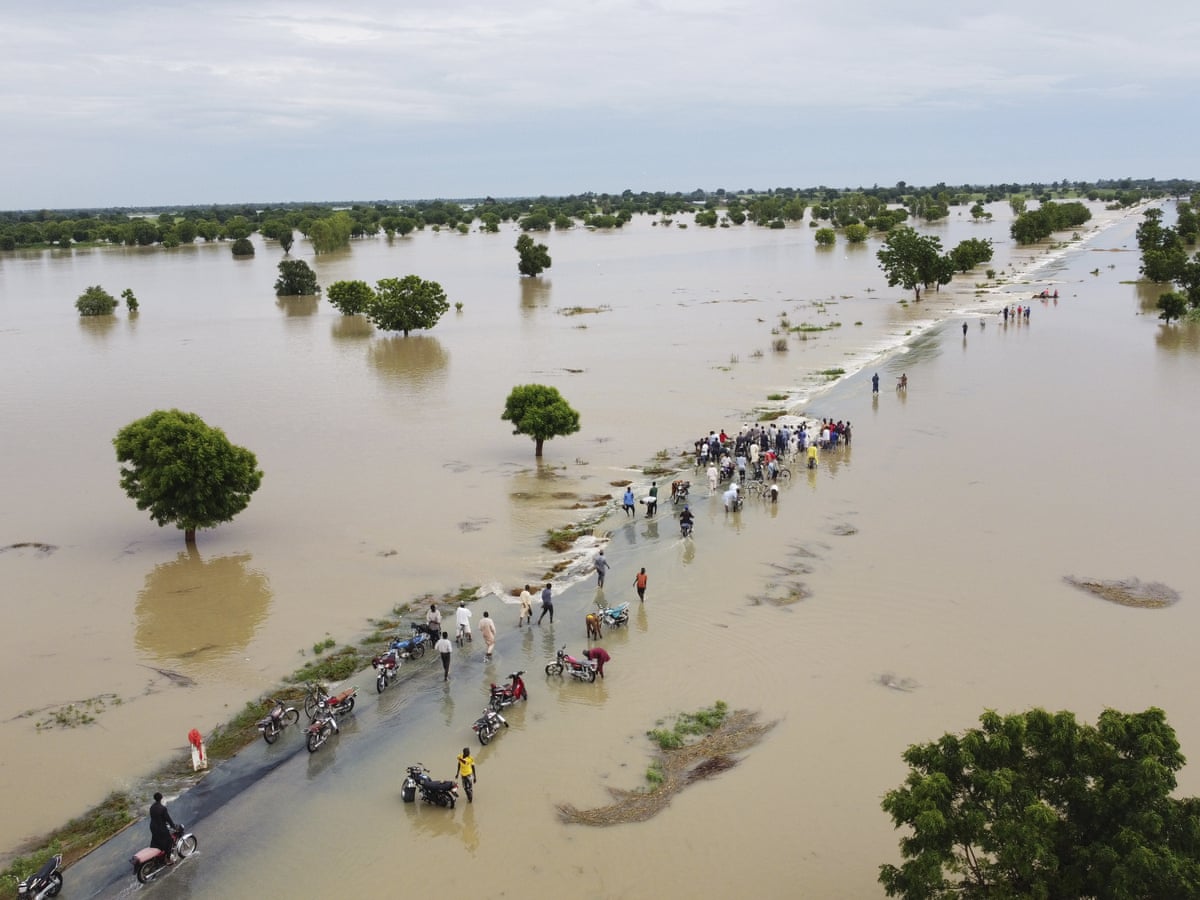
For Lagos, flooding is no longer an occasional disruption that arrives with the rainy season. It has become a recurring economic and social risk, with consequences that extend from households and small businesses to transport networks, property values, public infrastructure and the wider productivity of the economy.
Each episode of severe flooding raises the same questions: Why are drainage systems overwhelmed? Why do roads and communities remain vulnerable? Why does the city repeatedly spend resources responding to damage that could, in many cases, have been prevented?
These are not questions about the absence of government action. The Lagos State Government and other public institutions have undertaken drainage rehabilitation, canal clearing, road projects, environmental interventions and emergency-response measures. Such efforts are important and should be recognised.
But the persistence of the problem suggests that the challenge has moved beyond individual projects. What Lagos requires now is a more integrated and measurable flood-management strategy that places prevention, resilience and long-term economic sustainability at the centre of urban policy.
Flooding is an economic issue
Flood management is often discussed primarily as an environmental or humanitarian concern. That understates its significance.
When flooding closes major roads, workers arrive late or cannot get to work. When businesses are forced to shut temporarily, revenues are lost. When warehouses, shops and homes are inundated, inventories and property are damaged. When transport is disrupted, logistics costs rise and supply chains become less reliable.
For a commercial centre such as Lagos, these disruptions carry a substantial economic cost.
The consequences are particularly severe for small and medium-sized businesses, which often lack the financial capacity to absorb repeated losses. A business that loses equipment or stock several times may not survive long enough to recover.
Flood resilience should therefore be considered an investment in the competitiveness of Lagos, not simply an expenditure on environmental infrastructure.
Infrastructure alone will not solve the problem
There is an understandable tendency to measure flood-management progress by the number of drains constructed, canals cleared or roads rehabilitated. These interventions matter, but infrastructure without effective planning and maintenance will deliver diminishing returns.
A drainage system that is blocked by waste, poorly maintained or overwhelmed by development in its catchment area cannot perform as intended.
Government must therefore think about drainage as a network rather than as isolated projects. Drainage channels, roads, waterways, wetlands and other elements of the urban environment are interconnected. Intervention in one area can affect another.
This makes data and planning critical.
Lagos needs continuously updated flood-risk maps, reliable rainfall and drainage data, and development decisions that take these risks into account. New infrastructure should be designed using current and projected climate conditions rather than relying solely on historical assumptions.
Urbanisation must be managed, not merely accommodated
Lagos is growing rapidly, and that growth is necessary for economic development. The objective cannot be to stop urbanisation but to manage it intelligently.
Uncontrolled development can reduce natural drainage capacity by replacing wetlands, open spaces and permeable land with concrete and other impermeable surfaces. When this happens, rainwater runs off faster and places greater pressure on drainage systems.
The protection of wetlands and natural waterways must therefore be treated as an economic and infrastructure priority.
There is a tendency to see environmental protection and urban development as competing objectives. In reality, destroying natural flood buffers can increase the long-term cost of development.
Planning authorities must be prepared to enforce building regulations, protect drainage setbacks and prevent encroachment on waterways. Where regulations exist but enforcement is inconsistent, the result is predictable: private development gains in the short term while the wider public bears the cost of flooding later.
Maintenance is as important as construction
One of the less glamorous but most important aspects of flood management is maintenance.
Governments often receive greater public recognition for inaugurating new infrastructure than for maintaining existing assets. Yet effective drainage depends heavily on routine desilting, clearing, inspection and repair.
Budgeting should therefore distinguish between capital expenditure and the recurring cost of keeping infrastructure functional.
The test of a drainage project is not how impressive it looks when commissioned. The real test is whether it continues to function effectively several rainy seasons later.
Citizens cannot be left out
Government has the primary responsibility for public infrastructure and urban planning, but citizens also have a role.
Indiscriminate dumping of waste into drains and waterways directly undermines flood-management efforts. Communities, businesses and households must recognise that waste management is part of urban resilience.
At the same time, public authorities should provide reliable waste-collection systems and enforce environmental regulations consistently. Asking citizens to change behaviour without ensuring adequate waste-management services will produce limited results.
Community preparedness should also be strengthened. Residents in vulnerable areas need access to timely flood warnings, emergency information and clearly identified evacuation routes.
Technology can help. Mobile alerts, digital mapping, community reporting systems and real-time rainfall information can improve both preparedness and response.
Collaboration must go beyond government
The scale of the challenge makes collaboration essential.
Federal, state and local authorities must coordinate their responsibilities. Agencies responsible for transportation, housing, environment, planning, water management and emergency response cannot operate in silos.
The private sector should also have a seat at the table. Businesses have a direct financial interest in reducing disruption to commercial activity and can contribute technology, expertise, financing and data.
Universities and research institutions can provide modelling and climate-risk assessments, while professional bodies and civil-society organisations can contribute technical and community perspectives.
Most importantly, communities should not simply be treated as beneficiaries of flood-management projects. They should participate in identifying local risks and evaluating whether interventions are actually working.
Aligning flood management with the SDGs
Lagos’s flood-management agenda also provides an opportunity to translate the Sustainable Development Goals from broad international commitments into practical urban policy.
SDG 11 seeks inclusive, safe, resilient and sustainable cities. That ambition is directly relevant to Lagos.
SDG 6, on clean water and sanitation, highlights the importance of effective water management, while SDG 13 calls for stronger climate action and resilience to climate-related hazards. SDG 9 focuses on resilient infrastructure, and SDG 17 emphasises partnerships.
These goals provide a useful framework for measuring progress.
The question should no longer simply be how many drainage projects have been completed. It should be: How many communities are less vulnerable? How much has flood-related disruption to economic activity declined? How quickly can affected areas recover? How effectively are wetlands and waterways being protected? How much private and community participation has been mobilised?
These are better measures of resilience.
The next phase must be about outcomes
Lagos cannot eliminate flooding entirely. It can, however, reduce exposure, minimise damage and improve its capacity to recover.
That requires a shift from project-based thinking to outcome-based planning.
Government’s efforts should continue, but they need to be supported by stronger coordination, transparent monitoring, predictable maintenance funding and rigorous enforcement of planning and environmental regulations.
Other Nigerian cities facing similar pressures should also learn from Lagos. Rapid urbanisation is not unique to the commercial capital. Abuja, Port Harcourt, Ibadan, Benin City, Kano and other urban centres face different combinations of drainage, planning, waste-management and climate-related risks.
The lesson is therefore national.
Nigeria’s cities cannot afford to treat flooding as an annual emergency when the underlying risks are permanent.
The economic case for prevention is compelling. Every naira spent reducing exposure and improving resilience can help prevent much larger losses to businesses, households and public infrastructure.
Lagos has already demonstrated that it understands the seriousness of the challenge. The next step is to deepen the response: more investment where it matters, stronger collaboration, tougher enforcement, better data and greater community ownership.
The objective should be clear—not simply to manage the next flood, but to build an urban economy capable of withstanding the floods of the future.
That is the real test of sustainable development.


