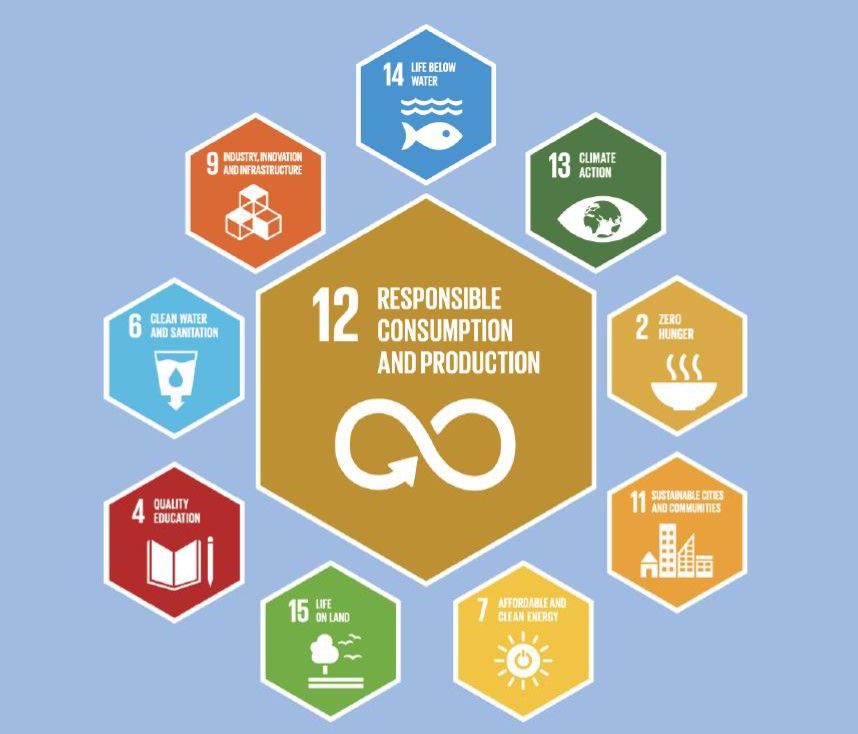
As Nigeria grapples with mounting environmental challenges—from plastic-choked waterways and overflowing dumpsites to food waste and unsustainable production practices—it is becoming increasingly clear that sustainable consumption cannot rest on the shoulders of consumers alone. While public awareness campaigns have encouraged Nigerians to make environmentally friendly choices, the greater responsibility lies with corporate organisations and public institutions that shape production, distribution and consumption patterns.
The narrative must therefore shift from individual responsibility to collective accountability.
For decades, businesses have profited from production models that generate enormous volumes of non-recyclable waste, while consumers have been left to contend with the environmental consequences. Plastic packaging continues to clog drainage channels in many cities, contributing to flooding during the rainy season. Yet, recycling infrastructure remains grossly inadequate, and compliance with environmental regulations is uneven at best.
This is where public policy must become more decisive. Federal and state governments should fully enforce Extended Producer Responsibility (EPR) regulations, compelling manufacturers and importers to finance the collection, recycling and safe disposal of the packaging they introduce into the market. Companies that invest in recyclable materials, circular production systems and waste recovery should receive tax incentives, while those that disregard environmental standards should face meaningful sanctions. Environmental compliance should not be treated as voluntary corporate philanthropy but as a legal and commercial obligation.
Corporate transparency is equally important. Nigerian companies should move beyond glossy sustainability reports and demonstrate measurable progress in reducing waste, conserving energy and lowering emissions. Investors, consumers and regulators increasingly expect Environmental, Social and Governance (ESG) performance to reflect genuine business practice rather than public relations. Mandatory sustainability reporting for large companies would strengthen accountability and align Nigeria with emerging global standards.
Nigeria’s fashion and textile industry also offers an opportunity to redefine sustainable production. As one of Africa’s leading creative industries, it can champion locally sourced materials, responsible manufacturing and ethical labour practices. Government should support this transition through targeted incentives for sustainable textile production, while industry leaders should embrace circular business models that promote durability, repair, reuse and recycling. Such reforms would not only reduce environmental pressure but also stimulate local enterprise and job creation.
Food waste deserves similar attention. It is both economically wasteful and morally troubling that significant quantities of food are lost across the value chain while millions of Nigerians remain food insecure. Better storage facilities, expanded cold-chain infrastructure and improved transport networks are essential to reducing post-harvest losses. Restaurants, supermarkets, food processors and hospitality businesses should also be encouraged to donate safe surplus food through legal protections and fiscal incentives. Reducing food waste is not merely an environmental objective; it is a matter of economic efficiency and social responsibility.
Corporate Nigeria must also rethink sustainability within its own operations. Energy efficiency, responsible water use, waste segregation, recycling and green procurement should become standard business practices rather than occasional corporate social responsibility projects. Sustainability must be integrated into boardroom decisions, investment strategies and long-term business planning because environmental stewardship increasingly determines competitiveness in a rapidly evolving global economy.
Government, for its part, must create an enabling environment through consistent regulation, effective enforcement and investment in recycling infrastructure, renewable energy and green innovation. Environmental laws that exist only on paper cannot deliver the transformation Nigeria urgently needs.
The private sector has repeatedly demonstrated its capacity to innovate in banking, telecommunications, agriculture and fintech. The same ambition is now required in environmental sustainability. Businesses that embrace responsible production today will not only reduce environmental risks but also position themselves for greater investor confidence and long-term growth.
Sustainable consumption is not about asking Nigerians to do more with less while corporations continue with business as usual. It is about building an economy where responsible production, informed consumption and effective regulation reinforce one another. The burden of protecting the environment must be shared fairly.
Nigeria cannot achieve sustainable development if environmental responsibility remains an afterthought. The time has come for government to regulate with greater resolve, for businesses to lead with greater responsibility, and for citizens to continue demanding higher standards from both. Sustainable consumption will become a reality only when corporate responsiveness and collective responsibility move from rhetoric to measurable action.