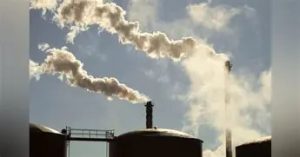
The Federal Government of Nigeria has expressed concern over the increasing incidence of respiratory illnesses, cardiovascular diseases, and other environment-related health conditions linked to greenhouse gas (GHG) emissions across the country.
The Minister of Environment, Mr. Balarabe Lawal, raised the alarm on Monday in Abuja during a stakeholders’ meeting on the National Emergency Response to Environment-Related Diseases Arising from Greenhouse Gas Emissions. The engagement was organised by the Environmental Health Council of Nigeria (EHCON).
Represented by the Permanent Secretary of the ministry, Mr. Mahmud Kambari, Lawal said data from environmental surveillance, health records, and peer assessments reveal a troubling rise in diseases associated with poor environmental quality.
According to him, the growing prevalence of respiratory and cardiovascular conditions has moved beyond being an environmental concern and has become a full-scale public health emergency.
“The disease burden linked to environmental degradation is increasing faster than our health system can manage. Families are spending more on healthcare, productivity is declining, and environmental damage continues to undermine national development,” he said.
Lawal noted that the lack of a coordinated national framework to address environmental health risks related to greenhouse gas emissions has worsened the situation. He added that this informed the government’s decision, in collaboration with EHCON and other stakeholders, to declare a public health emergency on environment-related diseases.
As a result, the Federal Government has activated the National Emergency Response Initiative on Environmental Public Health Impacts of Greenhouse Gas Emissions (NERI-EPHIGGE).
He explained that the initiative provides a comprehensive national framework for both short- and long-term interventions, including stronger environmental health regulations, improved enforcement, nationwide environmental health surveillance units, promotion of cleaner energy, sustainable industrial practices, low-emission transportation systems, and widespread public awareness campaigns.
Lawal assured that the ministry would continue working with state governments, development partners, relevant agencies, and civil society organisations to ensure environmental protection efforts deliver tangible public health benefits.
He stressed that addressing the crisis requires collective action, noting that government alone cannot shoulder the responsibility. Industries, regulatory bodies, and the transport and energy sectors must also play active roles.
“The cost of inaction is far greater than the cost of intervention. The science is clear, the health evidence is undeniable, and the risks are immediate. The time to act is now,” he said.
The minister urged all stakeholders to support the implementation of the emergency response initiative to achieve a cleaner environment, a healthier population, and sustainable national development.
He also commended EHCON for its commitment to environmental public health, describing the engagement as timely, especially as Nigeria faces rapid urbanisation, industrial growth, increasing energy demand, and expanded transportation activities—developments that, while driving economic progress, have also contributed to rising greenhouse gas emissions and environmental pollution.