The Federal Government has signed a Memorandum of Understanding (MoU) with the International Energy Agency (IEA) to deepen collaboration on methane emissions reduction, gas development, clean cooking access, and technical support.
The agreement was formalised on Tuesday at the IEA headquarters in Paris, France. Speaking at the ceremony, Minister of State for Petroleum Resources (Gas), Rt. Hon. Ekperikpe Ekpo, described the MoU as a strategic step toward enhancing efficiency, strengthening governance, and aligning Nigeria’s petroleum sector with global best practices.
Ekpo said the partnership builds on previous engagements between Nigeria and the IEA, including the inaugural Sub-Saharan Roundtable on methane emissions reduction hosted in the country.
“This MoU represents a significant milestone in our joint commitment to advancing Nigeria’s petroleum industry in a way that is efficient, sustainable, and consistent with international standards,” he stated.
According to the minister, the framework spans methane mitigation, policy and analytical advisory support, institutional and technical capacity building, data exchange, gas development, and expansion of gas infrastructure.
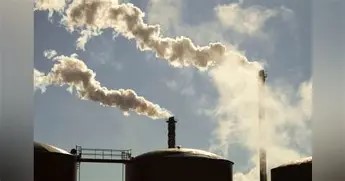
Beyond sectoral reforms, the agreement carries significant environmental and climate implications. Methane is one of the most potent greenhouse gases, with a global warming potential far higher than carbon dioxide over a 20-year period. Cutting methane leaks across the oil and gas value chain is therefore considered one of the fastest and most cost-effective ways to slow near-term global warming. Strengthened monitoring, reporting and verification under the partnership is expected to reduce routine flaring, curb fugitive emissions, and improve overall environmental performance in Nigeria’s upstream and midstream operations.
The expansion of gas infrastructure and improved efficiency are also projected to lower carbon intensity in energy production, while positioning Nigeria to better meet its international climate commitments under the Paris Agreement. By enhancing data transparency and regulatory oversight, the collaboration could further attract climate-aligned investments and green financing into the sector.
Ekpo also identified clean cooking as a central pillar of the agreement, noting that under President Bola Ahmed Tinubu, the Federal Government aims to transition five million households to Liquefied Petroleum Gas (LPG) by 2030.
Wider adoption of LPG is expected to deliver substantial environmental and public health benefits. Replacing firewood and charcoal with cleaner fuels can significantly reduce deforestation, indoor air pollution, and black carbon emissions — a short-lived climate pollutant that contributes to global warming. Improved access to clean cooking solutions is also linked to better health outcomes, particularly for women and children who are disproportionately exposed to household air pollution.
Ekpo expressed optimism that collaboration with the IEA would unlock critical technical expertise and global insights to enhance project bankability and fast-track infrastructure delivery.
IEA Executive Director, Dr. Fatih Birol, who represented the agency at the signing, praised Nigeria’s commitment to curbing methane emissions and expanding access to clean cooking gas, describing it as a step that aligns energy security with climate responsibility.